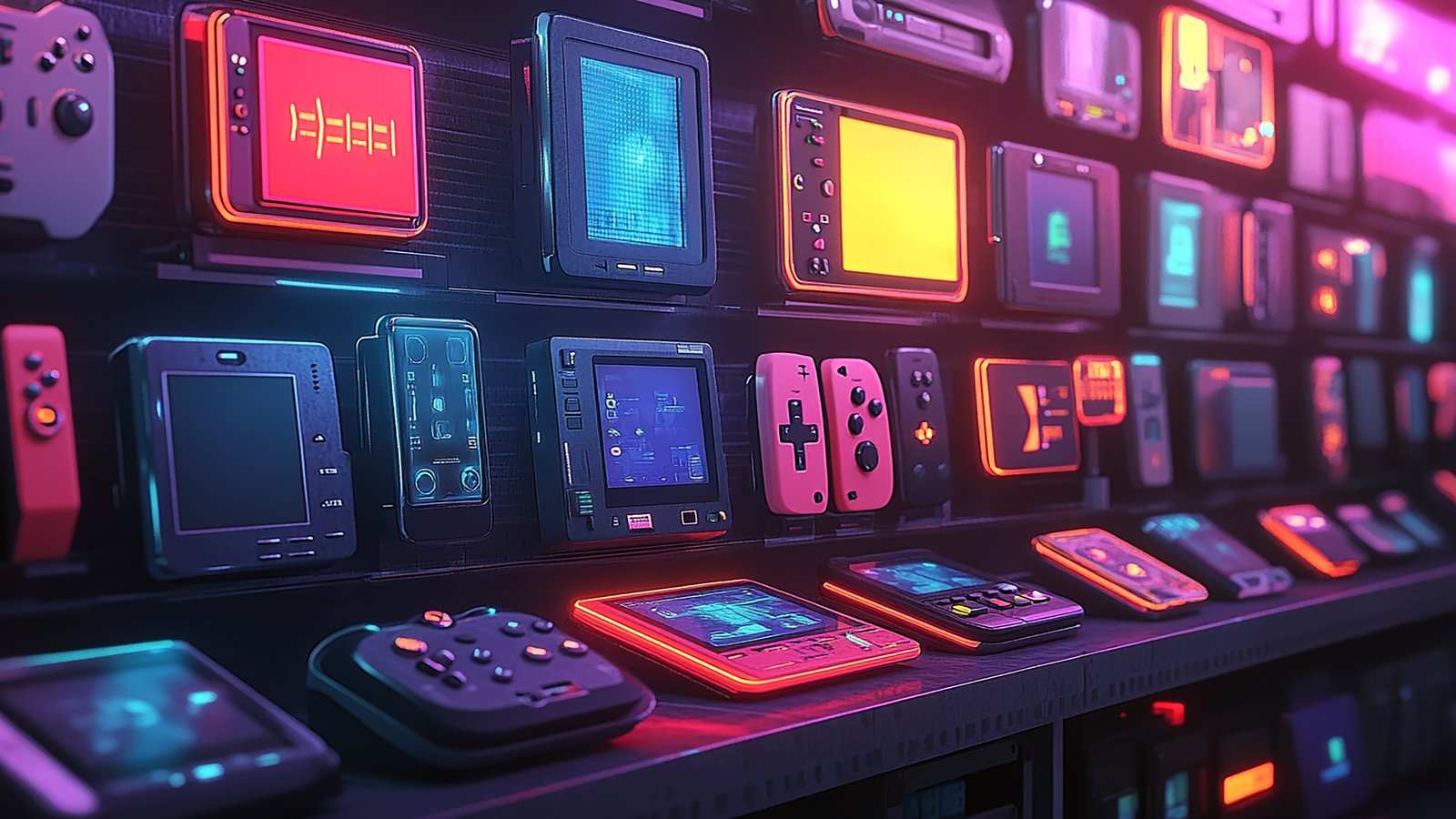
The handheld gaming market in 2026 is unrecognisable compared to even three years ago. What started with the Steam Deck opening up portable PC gaming has evolved into a full ecosystem of handheld devices, each with its own strengths and quirks. For indie developers, this represents both an enormous opportunity and a testing challenge that requires careful planning.
We’ve been tracking this shift closely at Relish Games because our work with 2D engines and sprite-based games aligns naturally with the performance and battery constraints of handheld hardware.
The Handheld Landscape in 2026
The current generation of handheld gaming devices falls into several categories:
PC Handhelds
The Steam Deck and its successors remain the dominant force. Newer models offer better battery life, improved displays, and enough GPU headroom to run most indie games at native resolution without compromise. The key advantage: if your game runs on PC, it almost certainly runs on these devices.
Dedicated Gaming Handhelds
Nintendo continues to iterate on the Switch concept, and new entrants from other hardware manufacturers have created genuine competition. These devices have custom operating systems and tighter hardware-software integration, which means better battery efficiency but more porting work.
High-End Mobile
The line between mobile gaming and dedicated handhelds continues to blur. High-end phones and tablets with controller attachments offer hardware that rivals dedicated handhelds, with the advantage of an existing install base in the billions.
What Handheld Development Actually Means
Developing for handhelds isn’t just about making your game run on a smaller screen. It requires rethinking several fundamental aspects of your design.
Input Considerations
Handheld controls are inherently different from desktop setups. You’re dealing with:
- Smaller thumbstick travel — precision is harder, so generous aim-assist or snap-to behaviour matters
- Fewer buttons — complex keyboard shortcuts need to be remapped to sensible controller combinations
- Touch as a secondary input — some handhelds support touch, which is great for menus and inventory management
- No mouse precision — UI elements need to be large enough for thumbstick navigation
For 2D games, this is generally good news. The input requirements for sprite-based games tend to map well to controller layouts. If you’re building with something like HGE, the input abstraction layer handles the basics, but you’ll still want to test with actual handheld hardware.
Performance Budgets
Battery life is the invisible constraint that separates handheld development from desktop. A game that runs at 60fps on a desktop GPU might manage the same framerate on a handheld — but drain the battery in 90 minutes.
Practical approaches:
- Target 30fps with a 60fps option — let players choose between battery life and smoothness
- Reduce background processing — particle systems, off-screen updates, and ambient animations should have aggressive culling
- Use efficient rendering paths — sprite batching and texture atlases matter more on power-constrained hardware
- Profile thermal behaviour — handhelds throttle when they get hot, so sustained performance is different from peak performance
Screen Size and UI
A 7-inch screen at arm’s length requires different UI thinking than a 24-inch monitor:
- Font sizes need to be larger than you’d expect
- Status indicators should use icons and colour rather than text
- HUD elements need clear contrast against varying game backgrounds
- Menus should be navigable with both thumbstick and touch where supported
The 2D Advantage
This is where 2D game developers have a genuine structural advantage. Sprite-based games are inherently more efficient than 3D titles, which translates directly to better battery life and thermal performance on handhelds.
A well-optimised 2D game using efficient sprite batching — the kind of rendering that engines like HGE are specifically designed for — can run at 60fps on handheld hardware while sipping battery. That’s a real competitive advantage when players are choosing what to play on a long flight or commute.
The visual clarity of 2D art also scales better to smaller screens. Pixel art in particular maintains its readability at handheld resolutions in a way that detailed 3D environments sometimes don’t.
Testing Without Going Broke
The practical challenge of handheld development is testing. You can’t buy every device, and emulation only gets you part of the way.
Prioritise Your Targets
Pick two or three primary handheld targets and optimise for those. For most indie developers in 2026, that means:
- Steam Deck (and compatible PC handhelds) — largest addressable market
- One console handheld — if you can secure a dev kit
- Touch-capable mobile — if your game design supports it
Use Profiling Tools
Every platform has profiling tools that simulate handheld constraints. Use them early and often. It’s much cheaper to discover a performance problem during development than after launch.
Community Beta Testing
The handheld gaming community is vocal and helpful. Early access builds specifically targeting handheld users will generate valuable feedback about ergonomics, readability, and comfort that you can’t get from desk-based testing.
Distribution Considerations
Handheld platforms have their own discovery dynamics:
- Steam Deck Verified badges genuinely influence purchase decisions
- Curated handheld game lists on storefronts drive meaningful traffic
- Word of mouth in handheld communities spreads faster than in general gaming forums
- Cross-save and cloud sync features are expected, not optional
Our Recommended Approach
If you’re planning a handheld-friendly game in 2026, here’s what we’d suggest:
- Start with handheld constraints, not desktop assumptions — design your UI and input for controllers first, then adapt for keyboard/mouse
- Build with a power budget from day one — it’s easier to add visual flair later than to optimise it away
- Choose a 2D framework that gives you control over rendering performance — the HGE documentation covers sprite batching and render optimisation if you’re on that path
- Test on real hardware as early as possible — even one handheld device is better than none
- Engage handheld communities during development — they’ll tell you what matters
The Opportunity
The handheld boom of 2026 is arguably the biggest new market opening for indie developers since the mobile revolution. But unlike mobile’s race-to-the-bottom pricing, handheld PC and console gamers are accustomed to paying fair prices for quality games. That makes it a sustainable market to build for.
The developers who succeed will be the ones who treat handheld as a first-class platform rather than an afterthought. For 2D game developers especially, the timing couldn’t be better.
Head over to our forum to share your handheld development experiences, or explore our projects to see games designed with portability in mind.