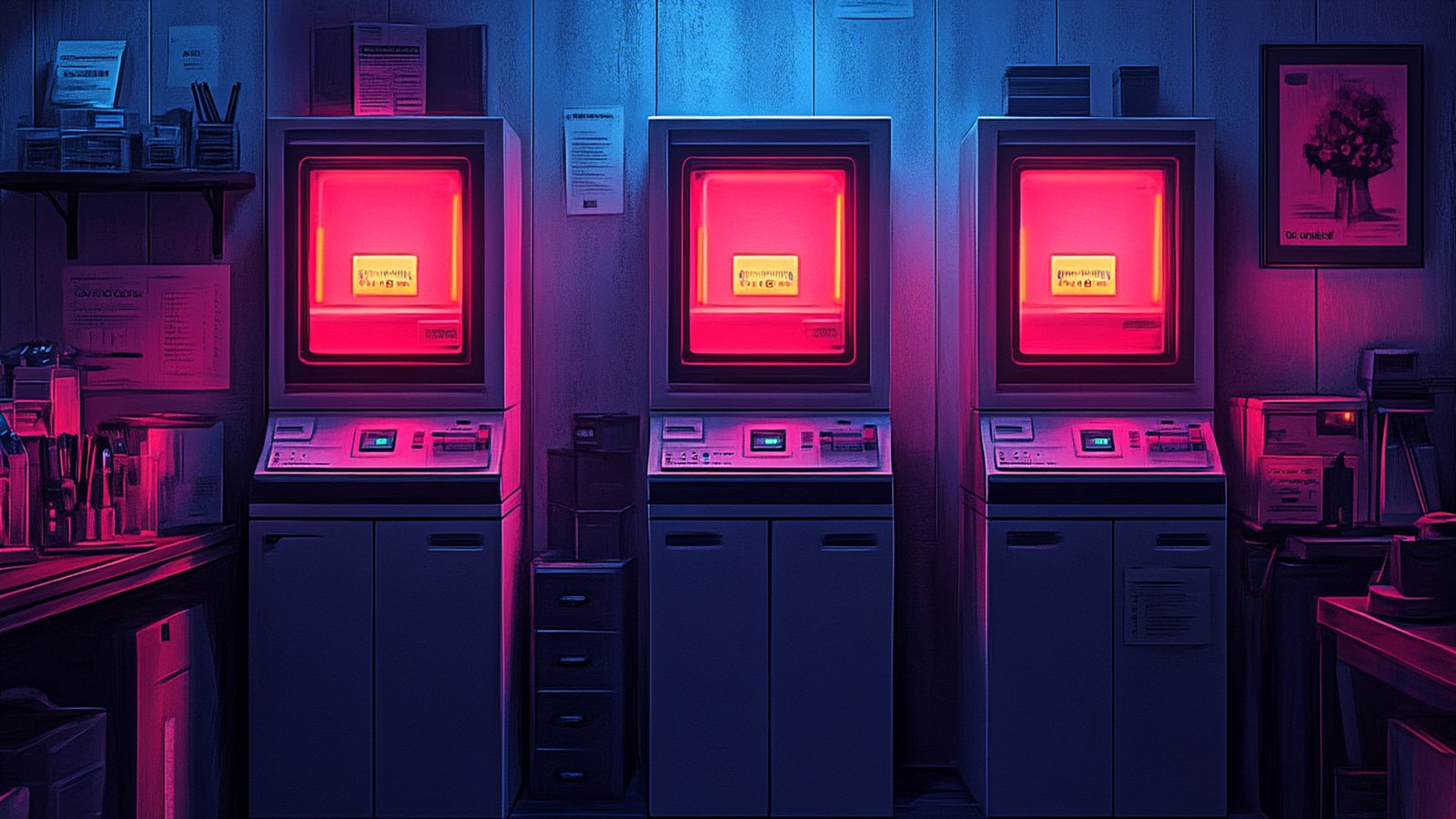
There’s a pattern in game development that repeats every decade or so. The industry pushes toward higher fidelity, bigger budgets, and more complex production pipelines — until the economics stop making sense for a significant portion of developers. Then the pendulum swings back toward smaller, more focused experiences.
In 2026, we’re deep into one of those corrections. Retro-style games and mid-budget AA titles aren’t just surviving — they’re thriving. And the reasons are more structural than sentimental.
The Economics of “Enough”
The AAA budget arms race has reached a point where even successful games can fail to recoup their investment. When a game needs to sell five million copies just to break even, the risk calculus changes entirely. Studios play it safe, sequels dominate, and the creative variety that drove the industry’s growth starts to shrink.
AA and retro-style games operate in a completely different economic reality. A well-made pixel art game with compelling mechanics can be profitable with sales numbers that wouldn’t even register on a AAA spreadsheet. That changes everything about what risks a team can take.
The Numbers That Matter
Consider the difference:
- A pixel art roguelike with a team of 3–5 can be profitable at 20,000 units
- A AA 3D action game with a team of 20–40 can be profitable at 200,000 units
- A AAA open world with a team of 200+ needs millions of units
The retro-style approach doesn’t just reduce development costs. It reduces the timeline, the coordination overhead, and the emotional toll of multi-year production cycles.
Aesthetic Authenticity, Not Just Nostalgia
The lazy explanation for the retro resurgence is “nostalgia.” And while there’s certainly an audience of players who grew up with 16-bit consoles, that doesn’t explain why younger players — who have no childhood connection to these aesthetics — are equally drawn to them.
The better explanation is that pixel art and retro-style visuals have developed their own design language that communicates effectively. A well-crafted pixel art character conveys personality and emotion with remarkable efficiency. The constraints of the medium force designers to focus on silhouette, colour, and animation timing rather than polygon counts.
At Relish Games, we’ve seen this firsthand. Our work with HGE’s sprite system has reinforced how much visual storytelling you can achieve with relatively simple 2D rendering when the art direction is intentional.
Modern Tech Powering Retro Aesthetics
One of the most interesting developments in 2026 is the combination of retro art styles with modern rendering techniques. We’re seeing pixel art games with:
- Dynamic lighting that creates mood and atmosphere without breaking the pixel aesthetic
- Particle effects that add visual richness — something engines like HGE’s particle system were built for
- Shader-based effects like CRT scanlines, bloom, and colour grading that sit on top of pixel art
- Physics-driven interactions that make environments feel alive despite simple graphics
This combination gives retro-style games a visual identity that’s distinct from both true retro games and modern 3D titles. It’s its own thing, and players respond to it.
The AA Sweet Spot
Between indie and AAA lies the AA space — games with moderate budgets, professional production values, and focused scope. These games don’t try to be everything. They pick a genre, a mechanic, or a setting and execute it well.
The AA space in 2026 benefits from several converging factors:
- Middleware has gotten cheaper and better — animation tools, audio engines, and build pipelines that used to require custom engineering are now accessible
- Digital distribution eliminates shelf-space politics — a AA game gets the same storefront visibility as a AAA title if players are interested
- Player fatigue with live-service models — there’s real demand for complete, finite experiences that respect the player’s time
- Remote work has reduced studio overhead — distributed teams can punch above their weight
What Indie Developers Can Learn
If you’re a solo developer or small team, the AA trend offers useful lessons even if you’re not operating at AA scale:
Focus Over Breadth
The successful AA and retro games of 2026 share a common trait: they do one or two things exceptionally well rather than doing everything adequately. A combat system that feels incredible. A narrative structure that’s genuinely surprising. A procedural generation algorithm that produces consistently interesting results.
Production Values Where They Count
You don’t need AAA production values everywhere. But you need them in the places players interact with most. Menu responsiveness, input feel, audio feedback on core actions — these details matter disproportionately.
Appropriate Technology
Choosing the right engine or framework for your scope is more important than choosing the “best” one. A lightweight 2D engine like HGE might be exactly right for a sprite-based game, while overkill or underkill for other projects. Match your tools to your ambitions.
The Market’s Message
The dominance of retro-style and AA games in 2026 isn’t a temporary blip. It reflects a market that values craft, personality, and respect for players’ time and money. The tools for creating these games have never been more accessible, and the audience has never been more willing to look beyond AAA marketing budgets to find experiences that resonate.
For developers considering where to invest their time and skills, the middle ground — between pixel-perfect retro and bleeding-edge 3D — offers the best risk-reward ratio we’ve seen in years.
Visit our community forum to discuss what’s working for your studio, or explore the HGE documentation if you’re considering a lightweight 2D approach.